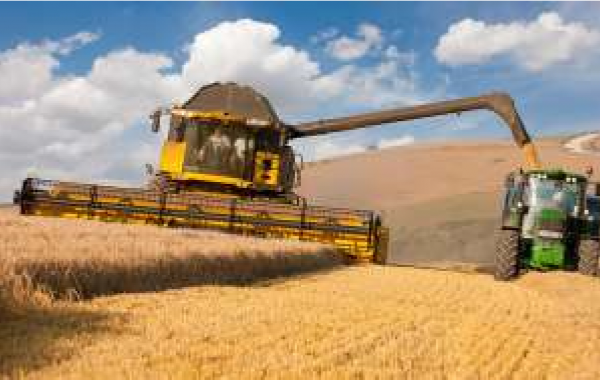
Nowadays organic fertilizers are used by farmers in all over the world for getting maximumoutcome, developed and upholding of agricultural product.The modern world has identified the risk of chemical fertilizers with the help of newtechnologies, whereas in almost all developed countries using chemical fertilizer has beendeclined and organic fertilizer has replaced the usage of chemical fertilizer.Almost 80% of Afghanistan land is covered by mountains and resident area, and that level of land which contains organic materials are washed by flood and rain, so the productivity of soil and agricultural is very low.As per needs and harm of chemical fertilizers, Arghand Diligent Brighters Company imports organic fertilizer named B.G.A. Under special supervision of H.E Minister of Agriculture and Irrigation, University Professors, and experts research was done on usage of B.G.A organicfertilizer on 6 different plants in Badam bagh farm, which the result was extremelyoutstanding and impressive.For laboratory test the sample of B.G.A organic fertilizer was tested in one of the wellknown laboratories in Afghanistan named Yasmin, fortunately the result was positive, therefore H.E Minister of Agriculture and Irrigation allows and appreciates the importing of B.G.A organic fertilizer to Afghanistan as the vital needs for promoting Agriculture in Afghanistan.
Agriculture Services

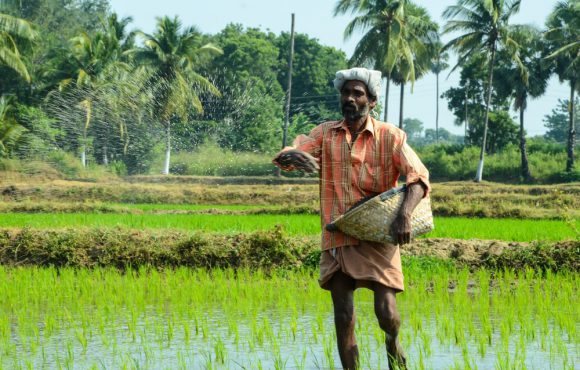
The application of this product can significantly improve soil structure and physical and chemical properties, increase soil organic matter improve soil biological activity improve soil fertility and quality, and achieve soil fertility goals, it can reduce the occurrence of soil pests and diseases in the cultivated land of the facility and the continuous obstacle to crops. And it can improve soil environment of crop rhizosphere, promote the root growth of crops, and achieve the effect of deep roots. It can meet the nutritional needs of several crops in different growing periods, make full use of anaerobic fat after regulation crops, and improve the fertility of crops. Cations can contain negative colloids to absorb soil nutrients, improve soil fertility, reduce nutrient loss, and improve fertilizer utilization. Improve fertilizer, water, water retentions and air permeability, stimulate the root system to absorb and use nutrients, and improve cropwinter ability. The nutrient combination is sufficient and reasonable water-soluble, fast absorption, high fertilizer utilization rate, strong crop strength, and long-lasting fertilizer effect, promoting fertilizer land productivity.
The world must produce more with less.
The sector is entering a new era, marked by scarcer resources, greater demand and higher risks of volatility. Since agriculture accounts for 70% of water use and up to 30% of greenhouse gas emissions, it contributes to and is threatened by environmental degradation. This will be exacerbated as the growing population demands more food – nearly double today’s levels by 2050 – and more resource-intensive produce such as meat and dairy.
Agriculture provides much more than food.
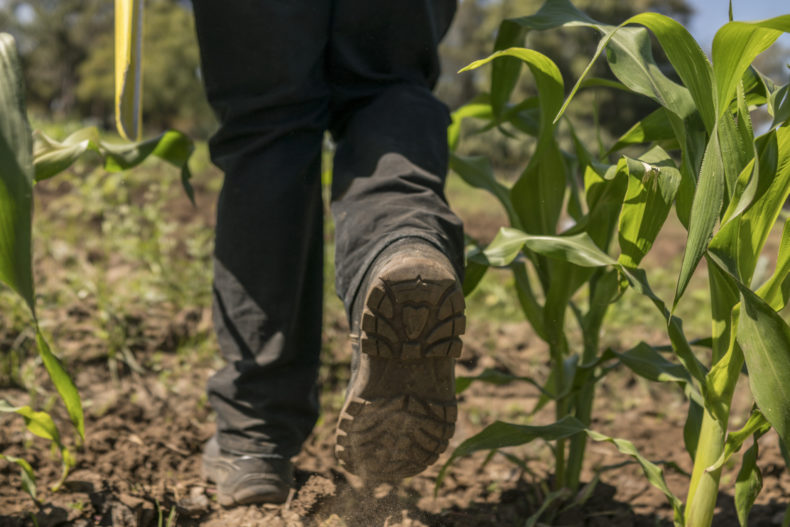
It offers essential commodities, environmental services and social goodsthat facilitate economic development, industrialization and diversification. From its inception, the purpose of agriculture has been to feed and fuel human activity. And now, it is more important than ever.
Agriculture can better fulfill the world’s most basic social needs.
Nearly 1 billion people go hungry today – half of them farmers – and malnutrition severely impedes human and economic development. Three-quarters of the poor live in rural areas, most relying on agriculture for their livelihood. In many regions, women contribute the bulk of farm labor. Farmers can be among the greatest beneficiaries of agricultural development and are at the core of the solution.
Time to act is now: committing to 20/20/20
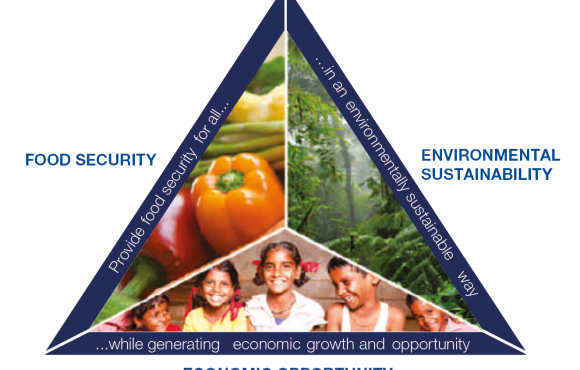
The new vision for agriculture strives to harness the power of agriculture to drive food security, environmental sustainability and economic opportunity. Its aspirations are high, not least of which are to increase production by 20% while decreasing emissions by 20% and reducing the prevalence of rural poverty by 20% every decade. These goals are intended to build on the Millennium Development Goals and other international targets by coordinating and concentrating the efforts of agricultural players around the world. We must act together with scale and speed. Market- based approaches are essential toimplementing viable solutions, as is collaboration among farmers, private industry, governments and civil society. The challenge is enormous, but the opportunity is both substantial and achievable.
Innovative Tools Can Break Bottlenecks in the Value Chain
Constraints can be found at every stage of the agricultural chain, from research to consumption. While common problems affect agriculture in many countries as well as Afghanistan, such as inadequate access to inputs, finance and storage, the most effective solution to breaking these bottlenecks vary between region and systems. Agriculture is and must continue to be innovation-driven. Many players have developed highly effective point interventions to address bottlenecks in the value chain, improving input technologies and farmer capabilities, for example. The technical know-how of global institution must be combined with the resourceful acumen of local entrepreneurs to inspire new breakthroughs. Achieving the new vision requires a greater number of these successes, adopted quickly at scale.
The Need for a New Vision
Society is critically dependent on agriculture. It is the foundation of the food chain and provides 40% of the world’s jobs. From its inception, the purpose of agriculture has been to feed and fuel human activity. Driven by innovation and investment, agricultural productivity has increased substantially. Almost 5 billion people have enough to eat today, up from only 2 billion half a century ago; in that same period, farmers in some parts of the world have doubled their resource efficiency. These successes have under pinned unprecedented growth and supported th development of modern society. But agriculture is entering a new era marked by scarcer resources, greater demand and potentially higher price and supply volatility. Going forward, the world must produce far more with less.
Growing demand
Agriculture faces the dual challenge of becoming more environmentally sustainable while feeding more people. In the next 40 years, the global population is expected to increase by one-third, peaking at over 9 billion. The intensity of consumption is growing even faster; as incomes rise in emerging markets, new members of the middle class demand more meat and dairy, which require more resources to produce. With 70% of the world’s population expected to live in cities by 2050, the need for effective food distribution – linking growers to retailers to consumers – will intensify. Urban populations demand more processed and ready-to-eat food, as well as more diverse options. This will increase the role of processing, packaging and logistics providers in food systems.
GHG Emissions Agriculture and forestry contribute heavily
- waster
- forestry
- Agricultur
- Industry,direct
- Industry.power
- Buildings powr
- Buildings,direct
- Transport
Our Future Plans
Here we have mentioned our main and future plan; According to our promises as mentioned earlier, Arghand Diligent Brighters Company Donates 50% of its revenues to our countrymen who deserve the company’s financial support. Deserving people are considered as the spiritual partners of the company, without being asked for a charge or being involved in the loss of the company. It should be noted that no domestic or foreign charity or NGOs has any contribution in this matter,but is exclusive to the good will of the founders of the company. We have promised to build Afghanistan’s infrastructure by using modern technologies and make Afghanistan a developed and independence country not only in the Asia but also in the whole world, therefore our team of professional researchers strive to find out the